Optimizing Shipyard Productivity: How Standardizing Lock Nuts Accelerates Modular Shipbuilding Cycles

Modern mega-shipyards face relentless pressure to shorten dry dock dwell times while handling increasingly complex pre-outfitted megablocks. When mechanical joints rely on disparate fastening methods, bolting bottlenecks quickly ripple across the entire erection schedule.
Standardizing on high-performance anti-loosening lock nuts streamlines modular ship assembly by eliminating split pins, double nuts, and safety wires, directly reducing joining labor hours and post-weld vibration inspection rework.
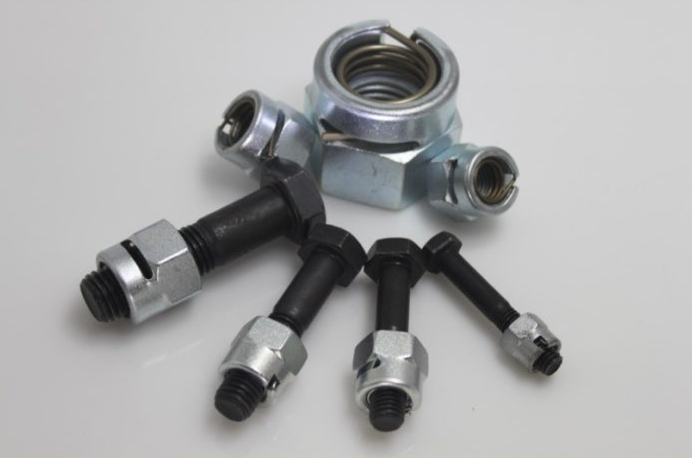
- Eliminates secondary locking hardware (cotter pins, chemical threadlockers, and double nuts) across block outfitting.
- Drastically reduces manual inspection cycles during block-to-block alignment and dock erection.
- Prevents joint back-off caused by high-frequency engine excitation and heavy wave sloshing.
- Provides consistent torque-tension relationships across diverse shipboard piping, machinery, and structural mounts.
Why Does Fastener Inconsistency Slow Down Modular Block Assembly?
In modular shipbuilding, grand blocks and pre-erection units arrive at the dry dock with pre-installed piping, machinery foundations, and cable trays. Joining these blocks requires hundreds of structural and mechanical connections that must endure severe operational loads.

When different outfitting teams utilize varying fastening techniques—ranging from conventional split washers to dual-nut jams—assembly crews face significant variance in installation protocols. Workers lose valuable crane cycle time switching between specialized tools, adjusting torque presets, and installing secondary retaining elements.
Furthermore, standard nuts frequently experience micro-loosening during block transportation and heavy crane lifts. Addressing loose joints in confined double bottoms or pre-insulated compartments requires extensive labor and holds up following trade teams.
Evaluating Fastener Efficiency: Conventional vs. Standardized Self-Locking Systems
Evaluating fastening systems on the shipyard floor requires looking beyond the initial piece price to consider total assembly time, tool requirements, and inspection overhead.

| Fastening Method | Installation Steps | Rework & Re-torque Risk | Vibration Resistance | Dock Cycle Impact |
|---|---|---|---|---|
| Standard Nut + Spring Washer | Position, hand-thread, torque | High (washer relaxation under dynamic load) | Moderate to Low | Baseline delay due to pre-commissioning checks |
| Double Jam Nut System | Run bottom nut, run top nut, counter-hold, dual torque | High (improper thread loading between nuts) | Moderate | Adds up to 40% more assembly man-hours per joint |
| Nut + Cotter Pin / Wire | Torque, align hole, insert pin, bend legs | Moderate (hole alignment delays torque target) | High (prevents total loss, not preload loss) | Labor-intensive in restricted compartment spaces |
| Standardized Safer Lock Nut | Single unit run-down, direct torque | Very Low (constant mechanical friction lock) | Exceptional (Junker test certified) | Minimizes installation time and eliminates rework |
To fully appreciate how mechanical locking prevents critical joint failure under severe sea conditions, explore our deep dive into loosening prevention mechanisms in marine fastening.
How Standardizing Anti-Loosening Nuts Accelerates Erection Cycles
Assembly workers install a unified lock nut in one operation using standard impact or calibrated torque wrenches, cutting average cycle time per bolted connection by over 30%.
Standardizing thread geometries and nut body profiles across equipment foundations reduces tool changeovers for scaffolding and rigging crews.
Mechanical locking features eliminate the need for manual wire twisting or pin verification, allowing quality control teams to sign off block joints rapidly.
Unified fastening layouts facilitate standardized inspection protocols and pave the way for connected predictive maintenance systems across the vessel lifecycle.
Ensuring absolute structural integrity also demands strict compliance with torque limits, detailed in our guide on torque management and NDT standards for marine fasteners.
Engineered Reliability: The Imjin S&T Safer Lock Advantage
To achieve reliable standardization across commercial and naval shipbuilding, shipyards rely on specialized manufacturers with proven marine pedigree. Imjin S&T, a recognized South Korean fastener manufacturer, engineers the patented Safer Lock anti-loosening nut system specifically designed for harsh dynamic environments.
Unlike chemical patches that degrade with temperature or split washers that flatten permanently, Safer Lock utilizes an integrated mechanical locking spring that grips the bolt thread securely when subjected to lateral and axial vibration. This delivers reliable reusable fastening across engine foundations, pump skids, deck winches, and rudder assemblies.
- Maintains clamping force under severe continuous engine excitation and dynamic wave impacts.
- Constructed from high-tensile marine carbon steels and stainless alloys to combat aggressive salt spray atmospheres.
- Compatible with standard international bolt threads without damaging mating male threads during repeated overhauls.
- Manufactured under strict ISO-certified quality management to meet rigorous global classification society standards.
For vessels exposed to continuous atmospheric humidity and corrosive washdowns, pairing mechanical locking with specialized metallurgy is vital, as outlined in our technical analysis on marine anti-loosening nuts and advanced surface treatments.
Practical Checklist for Standardizing Fasteners in Shipyard Operations

- Audit Existing Outfitting Classes: Map out all secondary retention hardware across piping, structural outfitting, and machinery foundations to identify consolidation opportunities.
- Select Unified Mechanical Lock Nuts: Specify all-metal or integrated-spring lock nuts (such as Safer Lock) across high-vibration zones to remove double-nut and split-pin requirements.
- Calibrate Assembly Tooling: Align pneumatic and electric torque wrenches with standard tightening torque charts to prevent under- or over-tightening.
- Update Block Production Standards: Revise block outfitting manuals and train assembly crews on single-pass fastening and visual inspection indicators.
Standardizing a single, dependable lock nut profile transforms a recurring bottleneck into an automated, predictable assembly step across all dry dock construction stages.
Frequently Asked Questions
Can standardized lock nuts be reused during routine ship maintenance?
Yes. High-performance mechanical lock nuts like Safer Lock are engineered for multiple assembly-disassembly cycles without losing their thread-locking torque or damaging mating bolts, making them ideal for periodic equipment overhauls.
How do anti-loosening nuts improve shipyard worker safety?
Eliminating lock wires and cotter pins removes sharp metal hazards that cause hand injuries. Furthermore, single-nut tightening reduces worker time spent in awkward postures within hazardous, confined shipboard compartments.
Are specialized tools required to install Safer Lock nuts?
No. Safer Lock nuts install using standard manual sockets, pneumatic impact wrenches, or hydraulic torque tools, ensuring immediate adoption without extra tooling investments on the dry dock floor.

Leave your inquiry and our team will get back to you shortly.
📩 Imjin ST SaferLock Contact us