Real-Time Clamping Force and Corrosion Monitoring: The Rise of Smart Lock Nuts in Maritime ICT

Modern commercial vessels and offshore platforms operate under severe cyclic loading, heavy hull vibration, and relentless salt-spray exposure. In these harsh environments, traditional manual bolt inspections often fail to detect early clamping force loss or hidden sub-surface corrosion before catastrophic mechanical failure occurs.
Smart lock nuts combine reliable mechanical anti-loosening designs with integrated sensor technology to track clamping force, pre-load retention, and galvanic corrosion rates continuously across maritime assets. By feeding live structural data directly into marine ICT platforms, these intelligent fasteners turn passive mechanical joints into predictive maintenance nodes.
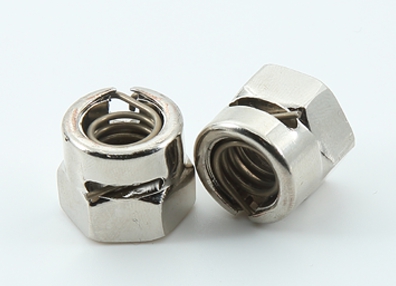
- Active Pre-load Tracking: Embedded strain sensors measure continuous clamping force, eliminating blind spots between dry-dock cycles.
- Corrosion Detection: Integrated micro-probes track electrochemical degradation beneath the nut bearing surface.
- Digital Twin Integration: Fastener telemetry streams directly to shipboard condition monitoring systems via low-power wireless protocols.
How Do IoT-Enabled Lock Nuts Detect Pre-Load Loss and Corrosion?
Traditional marine fasteners rely on friction or mechanical wedge locking, but environmental vibration from main propulsion systems can still induce micro-slip over thousands of operating hours. When paired with marine galvanic exposure, undetected bolt loosening leads to joint separation or structural fatigue.
Smart lock nuts incorporate miniature thin-film piezoelectric or strain-gauge sensors directly into the nut collar or washer interface. As torque is applied during assembly, the sensor records the precise axial load. If vibration or thermal contraction causes the bolt tension to drop below designated thresholds, the unit transmits an automated alert through shipboard telemetry. Advanced variants also feature impedance sensors that measure changes in electrolyte conductivity, identifying hidden crevice corrosion beneath the fastener head.
Leading manufacturers like Imjin ST have engineered specialized mechanical anti-loosening technologies, such as the Safer Lock Nut, that prevent rotational backing even under extreme vibrational shock. Combining this patented mechanical locking integrity with digital IoT sensing creates a zero-maintenance, fail-safe fastening ecosystem suitable for critical marine and offshore applications.
Mechanical vs. Sensor-Monitored Fasteners: Comparative Decision Matrix
Selecting the right fastening strategy requires balancing initial hardware investment against asset criticality and access difficulty. The matrix below outlines operational criteria across different marine deployment zones.
| Operational Scenario | Recommended Fastener Type | Primary Failure Risk | Key Advantage |
|---|---|---|---|
| Propulsion & Thruster Mounts | Smart Lock Nut (Sensor-Integrated) | High-frequency harmonic loosening | Continuous pre-load telemetry without engine shutdown |
| Subsea Flanges & Risers | Smart Lock Nut (Corrosion Sensor) | Galvanic attack & inaccessible leaks | Early alert before structural joint breach |
| Hull Modular Framing | High-Grade Mechanical Lock Nut | Cyclic wave shock & torque loss | Proven mechanical locking without wiring overhead |
| Auxiliary Deck Equipment | Standard Marine Fastener with Lock Washer | Atmospheric rust & loosening | Low initial cost for easily accessible areas |
For high-risk zones, integrating continuous monitoring significantly improves operational safety. You can learn more about how intelligent fasteners connect with marine control architectures in our overview of integrating smart anti-loosening nuts with marine ICT.
The Direct Impact on Offshore Structural Health Monitoring (SHM)
Structural Health Monitoring (SHM) systems in offshore energy and modern shipbuilding traditionally rely on global acoustic sensors and external strain gauges. While effective for macro-level hull stress, global sensors frequently miss localized joint degradation until structural deflection occurs.

Smart lock nuts convert every critical structural bolt into a localized monitoring node. By streaming distributed bolt tension data into the vessel’s central automation system, operators can visualize localized stress redistribution during heavy sea states. This granular visibility helps engineering teams isolate failing joints and plan targeted interventions during scheduled port calls.
Furthermore, maintaining verified clamping integrity directly supports long-term structural integrity. For a deeper technical perspective on preventing mechanical breakdown at sea, explore our guide on maritime torque management and NDT standards for lock nuts.
Pre-Deployment Checklist for Smart Fastening Systems
Before standardizing sensor-integrated lock nuts across commercial fleets or offshore rigs, technical superintendents should verify the following engineering parameters:
- Environmental Ingress Rating: Verify IP68 or hermetic sealing against high-pressure washdowns and saltwater immersion.
- Intrinsic Safety Certification: Ensure ATEX / IECEx compliance for deployment in hazardous explosive zones (e.g., LNG carriers, tanker decks).
- Telemetry Protocol Compatibility: Confirm wireless communication (WirelessHART, LoRaWAN, or BLE) interfaces cleanly with existing SCADA or fleet management gateways.
- Battery Lifespan vs. Dry-Dock Intervals: Verify sensor power modules match or exceed the standard 5-year marine dry-dock cycle.
- Certified Mechanical Locking: Ensure the base fastener retains complete mechanical anti-loosening capability even if electronic sensors lose power.
By pairing proven anti-loosening engineering with intelligent real-time diagnostics, shipbuilders and offshore operators can protect vital infrastructure, minimize manual inspection labor, and secure maritime safety in an increasingly automated industry.
Frequently Asked Questions
How does a smart lock nut maintain joint security if its battery or sensor fails?
Smart lock nuts are built on certified mechanical anti-loosening foundations, such as dual-thread, eccentric, or prevailing-torque mechanisms. The physical locking capability remains fully active regardless of electronic sensor status or power availability.
Can wireless sensor signals penetrate heavy steel ship bulkheads?
Smart fastening networks utilize mesh networking topologies (such as industrial LoRaWAN or WirelessHART) combined with strategically placed external relay repeaters, allowing seamless telemetry transmission through dense steel compartments.
Are smart lock nuts reusable during scheduled machinery overhauls?
Most industrial smart lock nuts are engineered for reusability. Technicians recalibrate zero-load baseline values in the software interface upon re-torquing the joint to maintain continuous measurement accuracy.

Leave your inquiry and our team will get back to you shortly.
📩 Imjin ST SaferLock Contact us