Anti-Loosening Mechanics & Spring Design Title: Mechanics of Anti-Loosening Technology: From Friction Generation to Auto-Locking Spring Mechanism Keywords: Anti-Loosening Mechanism, Structural Analysis, Auto-Locking Spring, Fastener Physics

- Standard bolted joints fail because transverse dynamic loads eliminate thread friction and preload.
- Friction-dependent solutions degrade over time under cyclic vibration and thermal fluctuations.
- Auto-locking spring mechanisms convert loosening movement into immediate radial and axial gripping force.
- Eliminating reliance on periodic retorquing protects critical industrial equipment from catastrophic failure.
Why Standard Fasteners Lose Clamping Force Under Vibration
Bolted joints stay tight primarily through tension. When you torque a standard nut, the bolt stretches slightly, acting like a stiff spring that clamps the joint together. The resulting friction between the internal and external thread flanks prevents the nut from rotating backward.
In static conditions, this friction is more than enough to maintain joint integrity. However, when an assembly encounters dynamic transverse vibrations, the friction between the mating threads temporarily drops to near zero.
Transverse dynamic movement causes micro-slips along the thread helix, allowing the stored elastic energy in the bolt to spin the nut free.
Once this micro-slip begins, the loss of preload accelerates exponentially. Standard friction-based fasteners simply cannot counteract the lateral forces that relieve elastic tension across the thread pitch.
The Limitations of Traditional Friction Enhancement
Engineers have long attempted to solve joint loosening by artificially increasing friction. While these methods offer temporary resistance, each has structural limits under continuous dynamic loading.
Polymer rings deform against bolt threads to generate radial friction, but they degrade rapidly under thermal cycling and cannot withstand high-temperature environments.
Distorted metal threads increase initial prevailing torque, yet repeated assembly cycles wear down the mating profiles and reduce locking effectiveness.
Intended to act as miniature springs, split washers often flatten completely under standard preload and fracture under intense cyclic loads.
For high-frequency operating environments such as high-speed rotating machinery and smart factory systems, relying strictly on friction additives introduces unavoidable maintenance liabilities.
Structural Analysis: The Auto-Locking Spring Mechanism
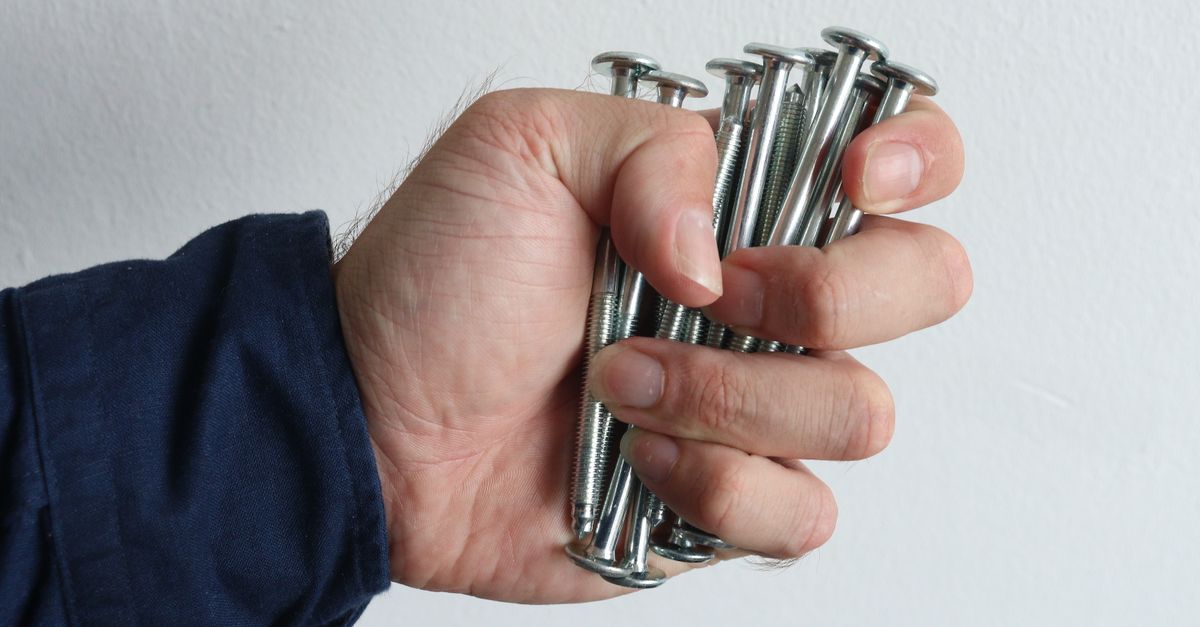
The auto-locking spring mechanism represents a fundamental shift in fastener physics. Rather than resisting dynamic motion through static friction, it harnesses the physical mechanics of an integrated spring element.
The system integrates a precision-engineered spring profile within or adjacent to the nut body. When turned in the tightening direction, the spring expands smoothly, allowing normal installation torque.
The dynamic response changes entirely when loosening forces act on the assembly:
- Directional Resistance: Reverse rotation causes the spring coil diameter to contract around the bolt thread root.
- Wedge Action: Relative micro-movement forces the spring into a mechanical bind against the thread flank.
- Load Transformation: The rotational loosening energy is converted directly into radial clamping force.
- Instant Engagement: Locking occurs mechanically within micro-degrees of movement, stopping preload decay.
Because the locking force increases proportionally with any attempted reverse motion, the fastener remains securely anchored regardless of vibrational amplitude.
Friction-Based vs. Mechanical Auto-Locking Comparison
Understanding the engineering trade-offs between standard prevailing torque methods and mechanical spring locking ensures appropriate specification for critical structures.
| Performance Metric | Standard Prevailing Torque Nut | Auto-Locking Spring Nut |
|---|---|---|
| Locking Mechanism | Material deformation / thread friction | Radial spring contraction & mechanical bind |
| Transverse Vibration Resistance | Moderate (degrades over time) | High (active dynamic clamping) |
| Temperature Stability | Limited by insert material / galling risk | High (all-metal spring composition) |
| Reusability | Declines sharply after 2–3 uses | Consistent performance across cycles |
| Maintenance Demand | Requires scheduled retorquing intervals | Virtually eliminates retorquing needs |
To realize these mechanical advantages on the assembly line, adhering to proper tightening guidelines and torque standards remains essential during initial installation.
Engineering Reliability in Critical Operating Environments
When fasteners fail in heavy infrastructure, the consequences extend far beyond component replacement. Unplanned downtime, damaged housings, and structural hazards generate immense operational costs.
Industries operating under severe cyclic loading—such as railway infrastructure, power generation plants, and semiconductor equipment—demand fastening systems that do not depend on constant human inspection.
By transitioning from passive friction retention to active auto-locking mechanics, engineering teams secure joint integrity, protect expensive capital assets, and maintain continuous operational safety.
Frequently Asked Questions
What causes bolted joints to self-loosen under vibration?
Dynamic transverse vibration causes micro-slips between the nut and bolt threads. This momentary loss of contact friction allows the bolt’s stored elastic tension to rotate the nut along the thread helix, rapidly releasing preload.
How does an auto-locking spring differ from a standard lock washer?
A standard lock washer provides only minimal axial spring tension that often collapses under working preload. An auto-locking spring mechanism actively contracts around the bolt threads during reverse rotation, mechanically blocking movement through directional wedge physics.
Can auto-locking spring nuts be reused after disassembly?
Yes. Because the auto-locking mechanism relies on elastic spring contraction rather than permanent thread deformation or polymer wear, high-quality spring lock nuts maintain reliable locking performance across multiple installation cycles.