Quality Standards & Certifications Title: Quality Standards and International Certifications: Selection Criteria for High-Reliability Structural Fasteners Keywords: NAS 3350 Vibration Test, Test Reports, Quality Standards, International Fastener Certifications

High-reliability structural fasteners require rigorous international certifications to guarantee that critical joints do not fail under extreme dynamic loads.
Selecting certified structural lock nuts involves verifying compliance with globally recognized testing protocols like the NAS 3350 impact vibration standard and reviewing accredited laboratory test reports. These verification steps ensure that safety-critical hardware maintains permanent clamping force across severe railway, aerospace, and energy infrastructure environments.
- Certified vibration tests separate engineered mechanical locking fasteners from standard friction-based hardware.
- International standards like NAS 3350 expose fasteners to transverse impact cycles to evaluate true self-locking capability.
- Verification requires authenticated test reports, traceable material quality certificates, and proven field performance.
Why Are International Fastener Certifications Critical for Modern Infrastructure?
Fastener failure in heavy machinery, bridge construction, or high-speed transit often leads to catastrophic structural damage and costly downtime. In high-risk operating conditions, standard nuts loosen when subjected to cyclic shear stress, thermal expansion, and continuous multi-axis vibration. Choosing certified hardware ensures that each fastener conforms to strict metallurgical and mechanical thresholds designed to eliminate unexpected self-loosening.
To understand why specialized hardware behaves differently under dynamic strain, engineers examine the underlying mechanics of anti-loosening technology, which focuses on positive mechanical locking rather than simple surface friction.
Understanding the NAS 3350 Impact Vibration Test Protocol
The National Aerospace Standard (NAS) 3350 test is widely regarded as the ultimate benchmark for evaluating anti-loosening performance. Unlike static tensile tests, the NAS 3350 procedure subjects the fastener assembly to violent, high-frequency transverse impact vibrations for a specified cycle count—typically 30,000 cycles at 1,750 to 1,800 impacts per minute.
During this test, standard nuts routinely lose initial preload within seconds as lateral forces overcome thread friction. Fasteners that pass NAS 3350 maintain clamping load without backing off, demonstrating structural integrity under conditions that mirror severe operational environments.
- Transverse Impact: Severe lateral vibration testing via NAS 3350 or equivalent standards.
- Preload Retention: Consistent clamping force retention through cyclic fatigue.
- Material Traceability: Mill test certificates documenting alloy composition and tensile strength.
- Surface Treatment Durability: Corrosion resistance certified via standard salt spray exposure.
How Do You Evaluate Fastener Test Reports and Quality Standards?

Engineers must cross-examine manufacturer claims against verifiable documentation. A valid test report specifies the independent testing facility, test setup parameters, applied torque, and remaining bolt tension following test completion.
| Operational Requirement | Recommended Standard / Certification | Verification Metric |
|---|---|---|
| Extreme Dynamic Shock | NAS 3350 / DIN 65151 (Junker Test) | Zero back-off rotation over 30,000 cycles |
| Material & Proof Load | ISO 898-2 / ASTM A194 / KS B 0233 | Proof stress, core hardness, yield strength |
| Corrosion Protection | ASTM B117 / ISO 9227 | Hours of neutral salt spray without red rust |
| Reusability Assurance | IFI 100/107 Prevailing-Torque Specs | Locking torque retention after repeated installation |
In addition to lab reports, practical considerations like fastener reusability and maintenance efficiency must be verified to ensure that repeatedly assembled joints retain certified holding torque in the field.
Engineering Innovation: SafeLock by IMJIN ST
Specialized manufacturers like IMJIN ST have set high benchmarks in structural fastener reliability through proprietary engineering. Developing advanced locking solutions such as Safer Lock (SafeLock), the company engineers hardware specifically designed to survive extreme industrial vibration where conventional fasteners consistently fail.
Manufactured under strict ISO quality management frameworks and validated by rigorous laboratory vibration testing, these fastening systems are deployed globally across demanding sectors. Learn more about how major industries integrate these certified systems in high-risk heavy industry applications spanning railway networks, power generation, and heavy industrial plant construction.
Pre-Procurement Checklist: Selecting the Right Lock Nut
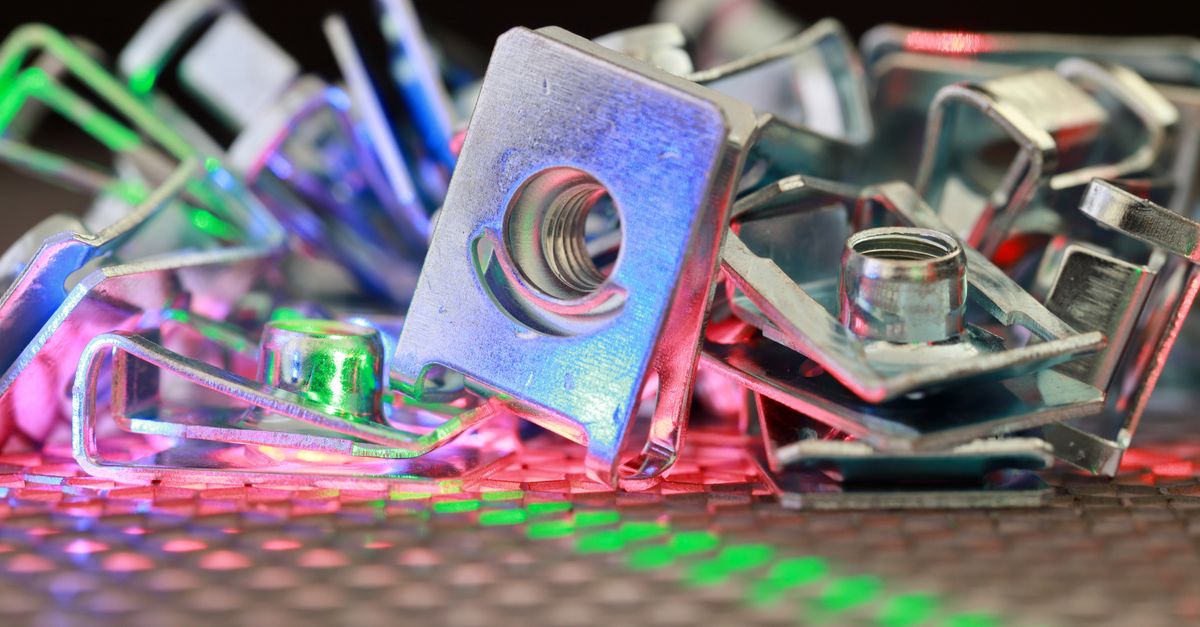
Before standardizing on a structural locking fastener for high-vibration applications, engineering and procurement teams should verify the following five criteria:
- Confirm independent laboratory test reports validating NAS 3350 or Junker vibration compliance.
- Check material grade compatibility with existing structural bolts (e.g., matching property class 8.8, 10.9, or 12.9).
- Verify surface coating specifications to avoid galvanic corrosion in aggressive outdoor or marine settings.
- Assess installation tool requirements to ensure standard torque wrenches can be used without proprietary limitations.
- Review on-site case studies across comparable dynamic load environments.
Frequently Asked Questions
What is the main difference between NAS 3350 and standard vibration tests?
NAS 3350 utilizes a transverse impact mechanism that subjects the nut-bolt assembly to aggressive lateral shock cycles, simulating the most destructive forces a fastener can experience in real-world machinery.
Does passing NAS 3350 mean a lock nut can be reused indefinitely?
While passing NAS 3350 confirms superior vibration resistance, reusability depends on the locking mechanism design, thread wear, and adherence to manufacturer torque specifications during repeated installations.
Why are mill test certificates necessary alongside vibration test reports?
Mill test certificates verify the raw chemical composition, tensile strength, and heat treatment uniformity of the steel, ensuring that every batch meets the mechanical standards required to support certified dynamic loads.