Conquering Wave Impacts and Engine Vibrations: Loosening Prevention Mechanisms in Marine Fastening

Marine environments subject structural bolted joints to continuous multi-axis stresses, ranging from relentless hydrodynamic wave slamming to severe low-frequency engine vibrations.
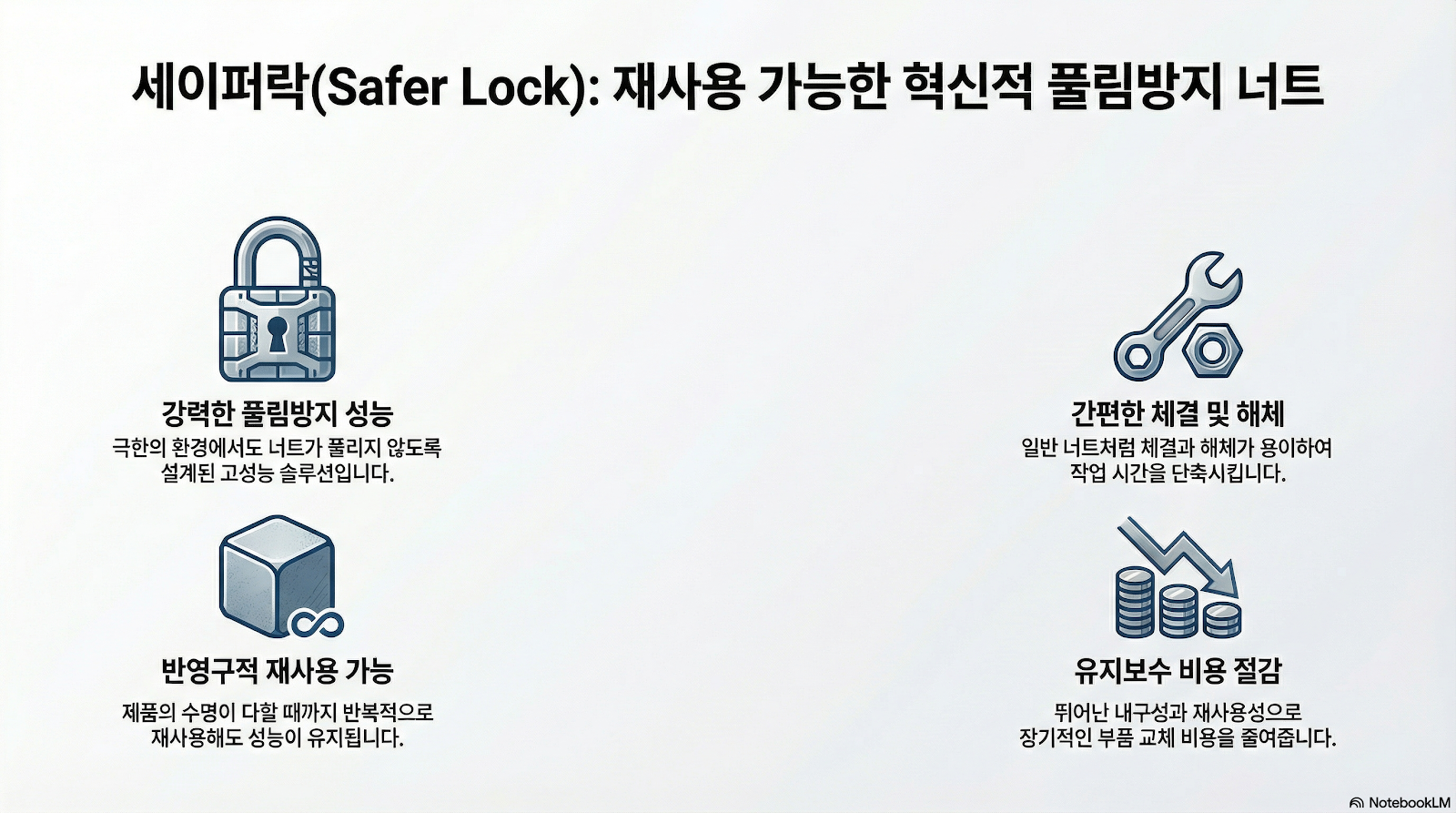
Specialized anti-loosening fastening mechanisms prevent catastrophic joint failure by maintaining clamping force and preventing transverse thread slippage under harsh cyclic vibration and ocean wave impacts.
When conventional fasteners fail under these combined dynamic loads, equipment downtime and structural integrity risks escalate rapidly across maritime operations.
- Continuous resistance to multi-axis transverse vibrations caused by marine diesel engines.
- Absorption of high-energy cyclic shock loads from hydrodynamic wave slamming.
- Preservation of initial pre-load torque without requiring hazardous secondary welding or chemical threadlockers.
- Mechanical reusability during scheduled drydock overhauls and offshore maintenance cycles.
Why Do Marine Bolted Joints Loosen Under Wave and Engine Stresses?
A standard bolted joint relies purely on friction between mating threads to sustain its clamping load. In marine vessels, propulsion systems generate sustained harmonic vibrations while ocean swells exert sudden dynamic shear forces on structural hull components.
These dynamic forces create micro-movements along the thread flank contact zones. When transverse slip occurs, the frictional resistance momentarily drops to zero, allowing the fastener to back off incrementally with each vibration cycle.
For critical marine systems, relying on standard nuts inevitably leads to pre-load loss. Understanding these mechanical stresses is essential for selecting appropriate hardware, as detailed in our guide on ensuring structural integrity in mega-vessels.
- Transverse Shear Loads: Lateral wave impact forces acting perpendicular to the bolt axis.
- Dynamic Harmonic Vibration: Engine and shaft rotations causing continuous micro-displacement.
- Thermal Cycling: Temperature differentials near propulsion units altering fastener tension.
- Corrosive Relaxation: Saltwater exposure degrading contact surface geometry over time.
Anti-Loosening Mechanisms: How Mechanical Locking Defeats Vibration
Engineered locking nuts eliminate reliance on surface friction alone by introducing mechanical interference or independent locking geometries.
Modern solutions utilize specialized thread profiles, friction rings, or dual-locking structures that exert continuous radial or axial counter-forces against the bolt threads. Even when subjected to extreme Junker vibration tests, these designs preserve the original bolt tension by physically preventing the rotational back-off motion.
To withstand the marine environment’s harsh atmosphere alongside physical vibration, high-performance designs often integrate advanced metallurgical coatings, bridging mechanical retention with marine corrosion and salt spray resistance.
| Fastener Type | Locking Principle | Vibration Resistance | Reusability in Marine Maintenance |
|---|---|---|---|
| Standard Hex Nut | Frictional thread contact only | Low (Loosens quickly under shear) | High (No locking capability) |
| Nylon Insert Nut | Polymer friction collar | Moderate (Degrades with heat/age) | Low (Single to limited reuse) |
| Split Spring Washer | Frictional tension spring | Low to Moderate (Prone to flattening) | Low (Permanent deformation) |
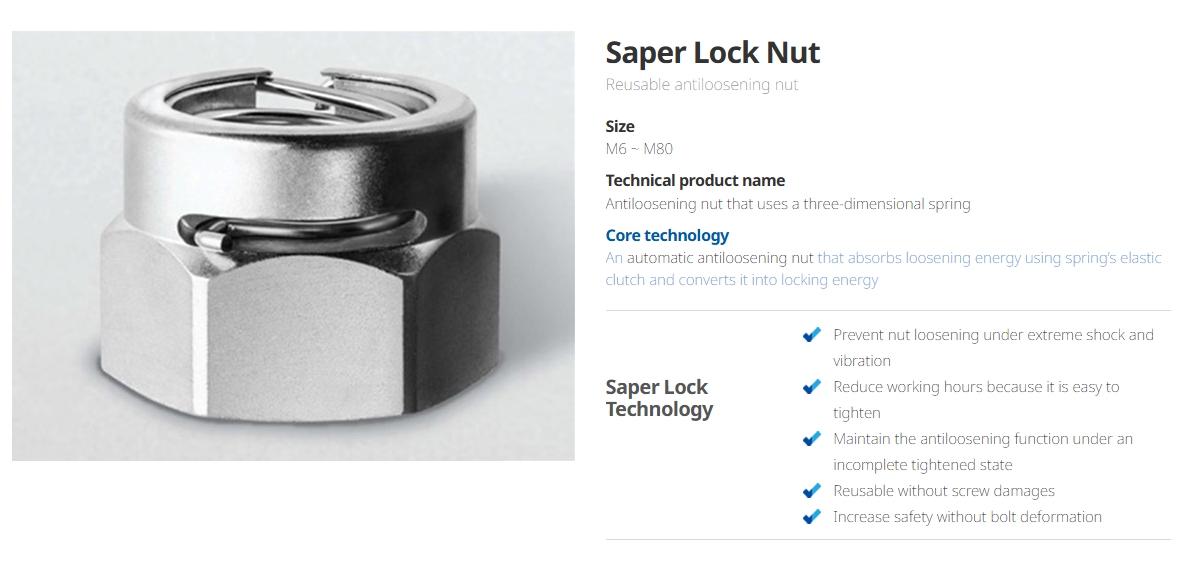
| Safer Lock Anti-Loosening Nut | Mechanical counter-locking mechanism | Exceptional (Withstands severe multi-axis vibration) | High (Maintains locking performance across maintenance) |
Engineering Reliability with IMJIN ST’s Safer Lock
Developed by IMJIN ST, a specialized manufacturer dedicated to high-performance industrial fastening solutions, the Safer Lock provides absolute fastener reliability in mission-critical applications.
Engineered to resolve chronic bolt loosening in high-vibration sectors such as maritime shipping, heavy machinery, and railway infrastructure, Safer Lock integrates a unique locking design that prevents rotation even under extreme dynamic shock loads.
Engineers looking to upgrade vessel propulsion systems or deck machinery must verify thread sizing and mechanical properties prior to procurement. Reviewing our Safer Lock bolt compatibility guide helps ensure seamless integration with existing marine grade studs and bolts.
Maintaining structural clamping load at sea is not merely a maintenance preference; it is a fundamental safety requirement that protects offshore assets from catastrophic mechanical failures.
Marine Fastener Selection and Maintenance Checklist
Selecting and maintaining the correct anti-loosening hardware requires a systematic evaluation of operating conditions before installation.
- Verify that fastener yield strength matches structural load calculations for marine shock forces.
- Confirm surface treatment compatibility with marine atmospheric salt levels.
- Check clearance parameters against equipment drawings before ordering specialized locking nuts.
- Ensure torque specifications are calibrated specifically for mechanical locknut geometry.
- Inspect thread integrity and re-tightening behavior during scheduled vessel drydock routines.
Frequently Asked Questions
How does engine vibration cause standard nuts to loosen automatically?
Engine vibration creates rapid transverse micro-displacements across the bolt and nut threads. These lateral movements temporarily eliminate the frictional resistance between mating thread surfaces, allowing the internal pre-load to rotate the nut backward step by step.
Can anti-loosening nuts like Safer Lock be reused during vessel drydock overhauls?
Yes. Mechanical locking systems engineered with durable metal configurations can be inspected, removed, and reinstalled during routine maintenance cycles without sacrificing their locking effectiveness, unlike single-use chemical thread adhesives or deforming polymer inserts.
Why are spring washers insufficient for marine engine and hull fastening?
Spring washers often flatten completely under normal bolt pre-load, effectively behaving like standard flat washers. Once transverse dynamic vibration occurs, they fail to provide adequate mechanical resistance to prevent rotational back-off.