Understanding thread engagement in vibration-resistant fasteners
When dealing with extreme mechanical vibrations, the way a nut grips a bolt determines whether your assembly holds together or fails. Engineers often debate how much thread contact is truly necessary to maintain clamping force. 특히 Safer Lock Nut 스레드 체결 방식에 따라 체결 유지가 달라집니다.
At its core, thread engagement dictates how loads are distributed across the fastener. If you have ever wondered why some assemblies loosen despite being torqued correctly, the answer often lies in how the threads interact under stress.
-
Full-contact engagement distributes mechanical stress evenly across all active threads.
-
Partial thread engagement concentrates stress, increasing the risk of stripping or premature loosening under heavy vibration.
-
Safer Lock Nut relies on specialized mechanical geometry to maintain security even when conditions are less than ideal.
What is full-contact thread engagement and why it matters
Full-contact thread engagement occurs when the internal threads of the nut and the external threads of the bolt achieve maximum possible surface-to-surface mating along the designated load-bearing length.
This complete mating allows the clamping load to spread across multiple thread turns. Because the load is shared, no single thread bears the brunt of the dynamic forces acting on the machine.
In high-vibration environments, this uniform distribution prevents local micro-slips that typically trigger fastener back-off. For industrial setups requiring maximum reliability, achieving complete thread engagement is a primary design goal.
Always verify that the bolt length is adequate to allow the locking mechanism to engage fully after the standard clamping load is reached.
The hidden risks of partial thread engagement

Partial thread engagement happens when a bolt does not pass completely through the locking feature or fails to utilize the full depth of the nut. This often occurs due to length mismatches, worn components, or space constraints.
When fewer threads carry the load, stress concentration skyrockets. Instead of sharing the weight, the first two or three engaged threads absorb nearly all the dynamic tension.
This concentration leads to several operational hazards:
-
Accelerated thread wear and potential stripping under heavy torque.
-
Reduced threshold for vibration-induced loosening.
-
Unpredictable clamp load retention over time.
|
Metric |
Full-Contact Engagement |
Partial Engagement |
|---|---|---|
|
Load Distribution |
Evenly spread across all threads |
Concentrated on top 2–3 threads |
|
Vibration Resistance |
Maximum stability |
High risk of back-off |
|
Reusability |
High, minimal thread deformation |
Low, due to localized stress damage |
How Safer Lock Nut performance changes under different engagement levels
Specialized fasteners like the Safer Lock Nut are engineered to resist self-loosening through unique wedge-locking or friction-generating designs. However, their efficiency is still tied to proper installation geometry.
Under full-contact conditions, the locking element performs at its peak specification. The mechanical interference or wedge action engages precisely as intended by the manufacturer, locking the assembly securely in place.
When engagement is partial, the locking mechanism may not seat correctly. If the specialized gripping features do not make complete contact with the mating threads, the self-locking effect can be severely compromised, rendering the fastener vulnerable to dynamic shifts.
Never compromise on bolt length just to save installation time; partial engagement defeats the primary safety advantages of advanced lock nuts.
What to verify before final assembly
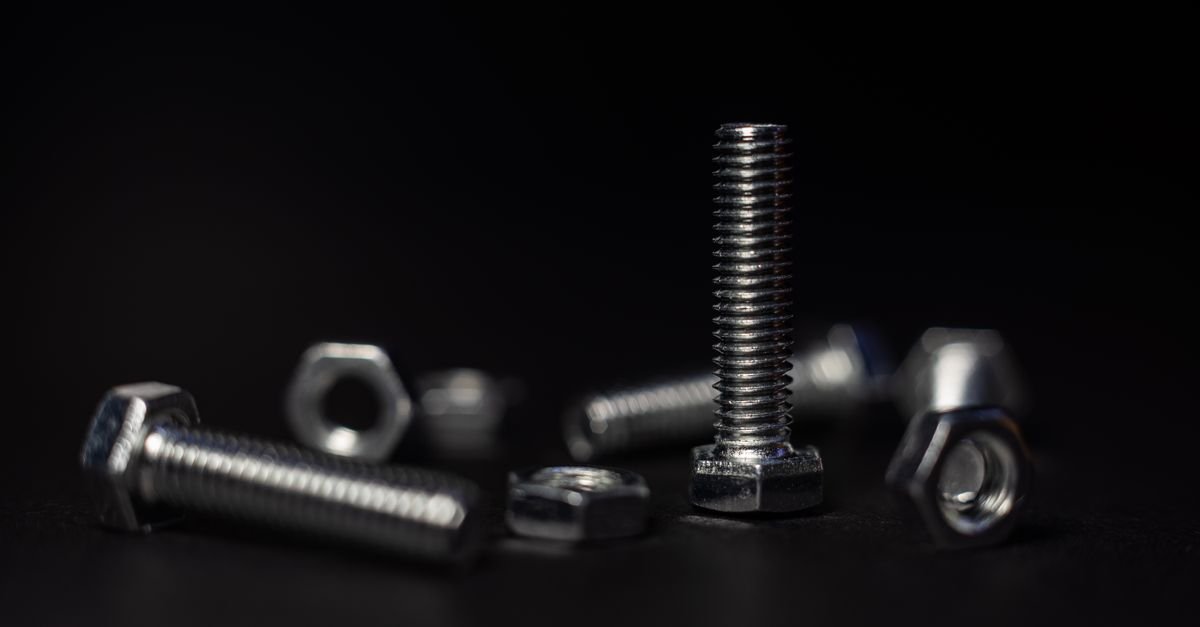
To ensure your mechanical assemblies do not fail prematurely, a systematic inspection routine is essential before applying final torque.
-
Check thread cleanliness to ensure no debris or burrs prevent smooth rundown.
-
Measure total bolt protrusion to confirm that the nut achieves full-contact depth.
-
Inspect for thread wear or stretching on older bolts before reuse.
-
Verify that the designated locking feature is fully engaged past the transition point of the bolt.
Proper thread engagement is not just a guideline—it is the foundational boundary where fastener physics meets real-world safety.
-
Clean mating threads thoroughly
-
Verify minimum thread protrusion requirements
-
Confirm correct torque specifications
Making the right choice for your application
Evaluating your assembly’s thread engagement comes down to balancing spatial limits with structural safety. If your equipment operates under severe cyclic loads, ensuring full contact is non-negotiable.
By prioritizing proper hardware selection and rigorous pre-checks, you can eliminate unexpected joint failures and keep your machinery running safely.
Frequently Asked Questions
What is the minimum thread protrusion recommended for a lock nut?
As a general engineering rule, the bolt should extend at least one to two full thread pitches past the face of the nut to ensure complete engagement.
Can I reuse a lock nut if engagement was only partial?
It is not recommended. Partial engagement often causes localized thread distortion, meaning the locking capability will be degraded upon reuse.
Does thread lubrication affect engagement requirements?
Yes. Lubrication changes the friction coefficient, altering the torque-tension relationship. Always follow manufacturer guidelines when applying anti-seize or lubricants.